A rainy afternoon can stretch forever when everyone is stuck inside and the screens have already lost their charm. Fuse beads are one of the few crafts that work for a wide age range at the same kitchen table: a five-year-old can fill a simple heart, a nine-year-old can build a Minecraft-style creeper, and a teenager can design something original. The setup is small, the mess is contained, and the payoff is a finished object someone can actually keep.
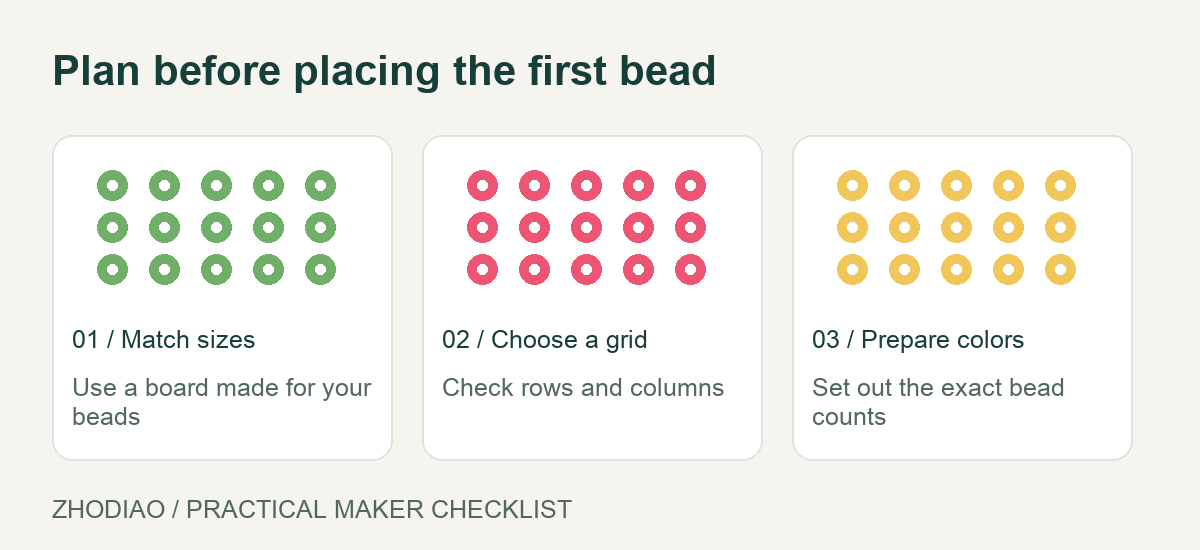
The trick is choosing projects that match the time and energy you really have. Here are fuse bead project ideas for rainy family afternoons, organized from quick wins to longer builds, with practical advice for setup, ironing, and clean-up.
Set Up a Rainy-Day Beading Station
Before anyone starts designing, spend five minutes on the station. It prevents most of the frustration that ends craft sessions early.
- Cover the table with a cloth or a large tray with a lip. Beads roll, and a tray catches them before they reach the floor.
- Use shallow dishes for each color instead of dumping a full bag. A muffin tin works well for six to eight colors.
- Keep pegboards flat and hand each person their own board so designs do not get bumped.
- Add tweezers for small hands or detailed areas, and keep a spare board nearby in case a design gets knocked over.
If you are new to the craft, a quick look at a beginner guide can save time on bead sizes and board types. It also helps to sort beads by color once, in advance, so future afternoons start faster.
Quick Projects for Short Attention Spans
When the rain has just started and younger kids are restless, start with something finishable in fifteen to twenty minutes.
Coasters and Mug Mats
A square coaster is a perfect first project. Fill a small square pegboard with a simple pattern, iron both sides, and let it cool under a heavy book so it dries flat. Older kids can make a set of four with a color theme.
Keychains and Bag Charms
Small shapes like stars, hearts, initials, and tiny fruit slices work well as charms. Leave one bead hole open at the top, or fuse a small loop, then thread a keyring through. If you want ready-made hardware instead of improvising, a set of fuse bead keychain supplies makes this step easier for kids to manage on their own.
Name Tags and Initials
Letter beads or block letters make personalized tags for backpacks, lunch boxes, and coat hooks. This is a good project for a child who wants to make something useful rather than decorative.
Medium Projects for a Full Afternoon
Once everyone is settled, move to projects that take an hour or more and give the afternoon a shape.
Pixel Art Characters
Fuse beads are essentially physical pixels, so classic video game characters, animals, and emoji faces translate naturally. Print or sketch a grid pattern first, then count rows as you go. Working from a pattern reduces mistakes and keeps the build moving.
Seasonal Decorations
Rainy days are a good time to get ahead on decorations: snowflakes in winter, flowers in spring, pumpkins in autumn. A set of small ornaments can be strung on a garland or hung on a window with suction cups.
Jewelry and Hair Accessories
Fused shapes can become pendants, bracelet charms, or hair clips. Use a small hole at the top for cord, and glue a flat clip to the back for hair accessories. Supervise the glue step and let pieces cure fully before wearing.
If you want a starting point that does not require drawing your own grid, browsing free bead patterns gives you ready-made designs for a range of skill levels.
Bigger Builds for the Whole Family
When the rain lasts all day, a group project gives everyone a shared goal and keeps older kids engaged.
A Family Mural
Connect several large pegboards and assign each person a section. Agree on a palette first so the final piece looks intentional. A simple landscape, a rainbow, or a map of a favorite place all work well. Iron the sections separately, then join them with a low-temperature glue gun or display them as a grid.
A Board Game or Puzzle Set
Make tic-tac-toe pieces, checkers, or a set of tokens for a homemade game. This takes longer but produces something the family can actually play with on the next rainy day.
A Collaborative Quilt-Style Banner
Each person makes one square with their own colors and symbols. Punch two holes in each square, thread them onto ribbon or yarn, and hang the banner across a doorway or mantel.
Ironing and Finishing Without Tears
Ironing is the step where projects most often go wrong, so treat it as an adult job with a clear process.
- Place parchment paper or a pressing sheet over the design so beads do not stick to the iron.
- Set the iron to medium, with no steam, and press in slow circles for about ten to twenty seconds.
- Lift the paper and check whether the beads have fused. If not, press again in short bursts rather than one long press.
- Flip the project carefully, cover it again, and press the other side so it holds together.
- Lay the piece flat under a heavy book or cutting board while it cools to prevent warping.
Work in a ventilated room, keep the iron on a stable surface, and keep younger children at a safe distance. A pair of fuse bead tools such as tweezers and pressing sheets makes the finishing stage more controlled, especially with small shapes.
Keeping the Afternoon Calm and Organized
A few habits make the difference between a pleasant craft session and a pile of spilled beads.
- Assign roles. One person sorts colors, one designs, one irons with an adult, one handles clean-up.
- Set a time limit. Decide in advance whether you are making one small piece or working until dinner.
- Photograph designs before ironing, in case a board gets bumped.
- Store leftovers by color in labeled bags or small containers so the next session starts quickly.
Color choice matters more than most people expect. A limited palette often looks better than a random mix, and planning colors first keeps kids from digging through every bag. Browsing color palette ideas can help younger makers pick combinations that work together.
Making Rainy Days Something to Look Forward To
The best fuse bead afternoons are not about perfect results. They are about having a project that fits the mood of the day, whether that means a ten-minute keychain or a family mural that takes the whole afternoon. Start with a simple setup, match the project to the attention spans at the table, and keep the ironing step calm and supervised.
When the rain stops, you will have a collection of finished pieces, a few new patterns to reuse, and a craft the family can return to the next time the sky turns gray.