You have a pegboard, a bag of beads, and a pattern you want to make. But when you open that first bag, you realize something: most starter kits give you a rainbow of colors that look cheerful in the package but leave you short on the shades you actually need. You run out of black before you finish the outline, and you have three shades of pink that all look the same. A useful fuse bead starter palette is not about having every color—it is about having the right colors in the right amounts. This guide will help you choose a palette that works for real projects, whether you are making pixel art, keychains, or detailed sprites.
Start with the Colors You Will Use Most
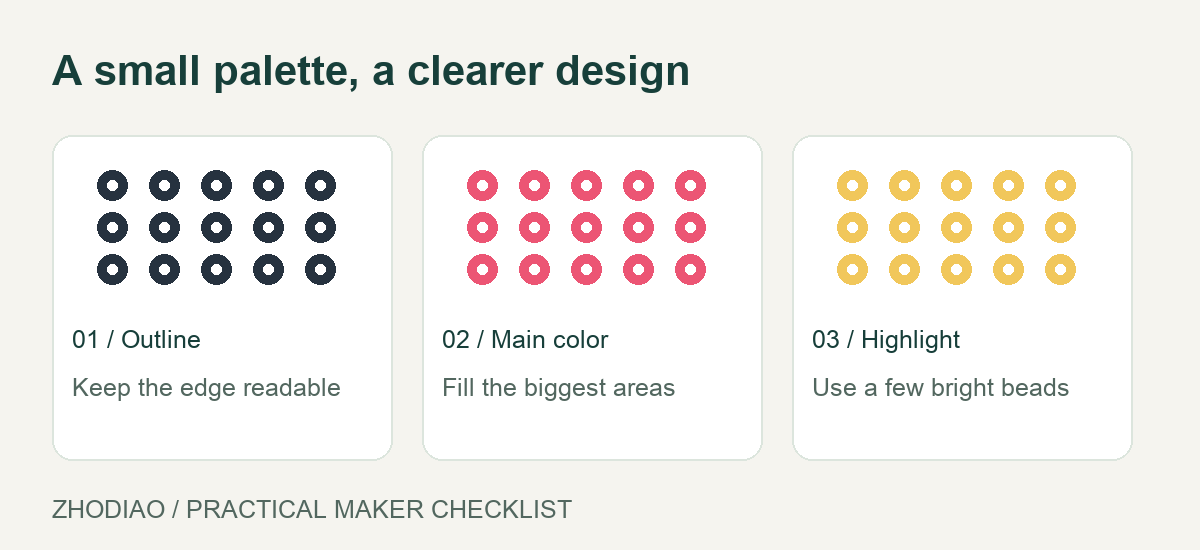
Every fuse bead project relies on a few workhorse colors. Before you buy anything, think about the last five designs you wanted to make. Chances are, they share a common core: black, white, and a few mid-tone neutrals. Black is essential for outlines, eyes, and shadows. White is used for highlights, backgrounds, and negative space. Gray and clear beads help with shading and blending. If you are building a palette from scratch, these should be your first purchase.
A good rule of thumb is to allocate about 40 percent of your budget to black, white, and grays. These colors disappear quickly because they are used in almost every project. Many beginners make the mistake of buying a large set of bright colors and then run out of black after two small projects. You can avoid that by buying black and white in bulk—often sold in 1,000-count bags—while buying accent colors in smaller quantities.
If you are following a specific pattern, check the color list before you shop. For example, a Pokémon sprite might need six shades of green, but a simple heart design might only need red and pink. Knowing your project helps you avoid buying colors you will never touch. You can find many free patterns online to plan your palette around, such as those at zhodiao.com/free-patterns/.
Choose a Balanced Range of Hues
Once you have your neutrals, add color in a balanced way. A useful starter palette should cover the color wheel without going overboard. Aim for two or three shades of each primary color family: red, blue, and yellow. From there, add secondary colors like green, orange, and purple. This gives you enough range to mix and match for different projects.
Here is a practical starter list that covers most beginner and intermediate designs:
- Black, white, and light gray (buy these in large bags)
- Red, dark red, and pink
- Orange and yellow
- Light green, dark green, and teal
- Light blue, dark blue, and navy
- Purple and lavender
- Brown and tan
- Clear (for blending and special effects)
This list gives you 20 to 25 colors, which is enough to make most pixel art, keychains, and small figures. You do not need every shade of every color. In fact, having too many similar shades can be confusing. Stick to distinct hues that are easy to tell apart. For more ideas on building a cohesive set, see the color palette guide at zhodiao.com/color-palettes/.
Match Bead Size and Brand for Consistency
Fuse beads come in different sizes, and mixing them can cause problems. The most common size is 5mm (often called midi), which is great for beginners and works with standard pegboards. Mini beads (2.6mm) are smaller and allow for more detail, but they require different pegboards and tools. If you are just starting, choose one size and stick with it. Buying a mix of sizes will only frustrate you when beads do not fit your board.
Brand consistency matters too. Different manufacturers may have slightly different melting points and color formulations. If you mix brands, you might find that some beads melt faster than others, leading to uneven projects. It is best to pick one brand that is widely available and affordable, then build your palette around that brand. Many crafters prefer a specific brand for its reliable quality, and you can often find starter sets that include a good range of colors. For a selection of starter kits and individual colors, check out the options at matching supplies at Fusedots.
Plan for Expansion Without Overspending
A starter palette is not meant to be permanent. As you grow, you will want to add more colors. The key is to expand based on what you actually use. Keep track of which colors run out first, and buy those in larger quantities. If you notice you are constantly substituting one color for another, buy the color you wish you had.
Here is a simple three-step method to expand your palette smartly:
- Track your usage. After each project, note which colors you used most. If you find yourself reaching for a particular shade repeatedly, add it to your permanent collection.
- Buy in stages. Instead of buying a huge set all at once, buy 5 to 10 new colors at a time. This lets you test which ones you actually like and use.
- Use a color chart. Print or make a chart of your beads to see gaps in your palette. This helps you avoid buying duplicates and spot missing hues.
Expanding gradually also helps you learn color theory. You will start to see how different shades work together and which ones you prefer for shading and highlights. For a deeper dive into materials and how to organize them, visit zhodiao.com/materials/.
Test Your Palette with a Small Project
Before you commit to a large purchase, test your palette with a small project. Pick a simple pattern that uses five to seven colors, and see how it feels to work with your chosen set. Do you have enough contrast? Are any colors too similar? This test will reveal gaps in your palette without costing much.
A good test project is a small keychain or a coaster. These use a limited number of beads and can be finished in an hour or two. If you find yourself struggling to distinguish between two colors, replace one with a more distinct shade. If you run out of a color quickly, that is a sign to buy more of it next time.
Many crafters also find it helpful to sort their beads by color family in small containers. This makes it easy to see what you have and what you need. You can find storage solutions and more tips at matching supplies at Fusedots. Remember, the goal is not to have the biggest collection—it is to have a collection that supports your creativity.
Conclusion
Building a useful fuse bead starter palette is about focusing on the colors you will actually use. Start with black, white, and grays in bulk, add a balanced range of hues, and choose one bead size and brand for consistency. Expand gradually based on your projects, and test your palette with small designs before buying more. With this approach, you will spend less and create more. Whether you are making your first pixel art or planning a detailed sprite, a thoughtful palette will make the process smoother and more enjoyable.